
The Entrapment of the Ten Guests
And Then There Were NoneTraces how each guest is lured to Indian Island under false pretenses, their arrival, and the shocking revelation that they are all prisoners of a mysterious host.
increasing Bearing strength in each event
 decreasing
Bearing strength in each eventdecreasingInvitations Received
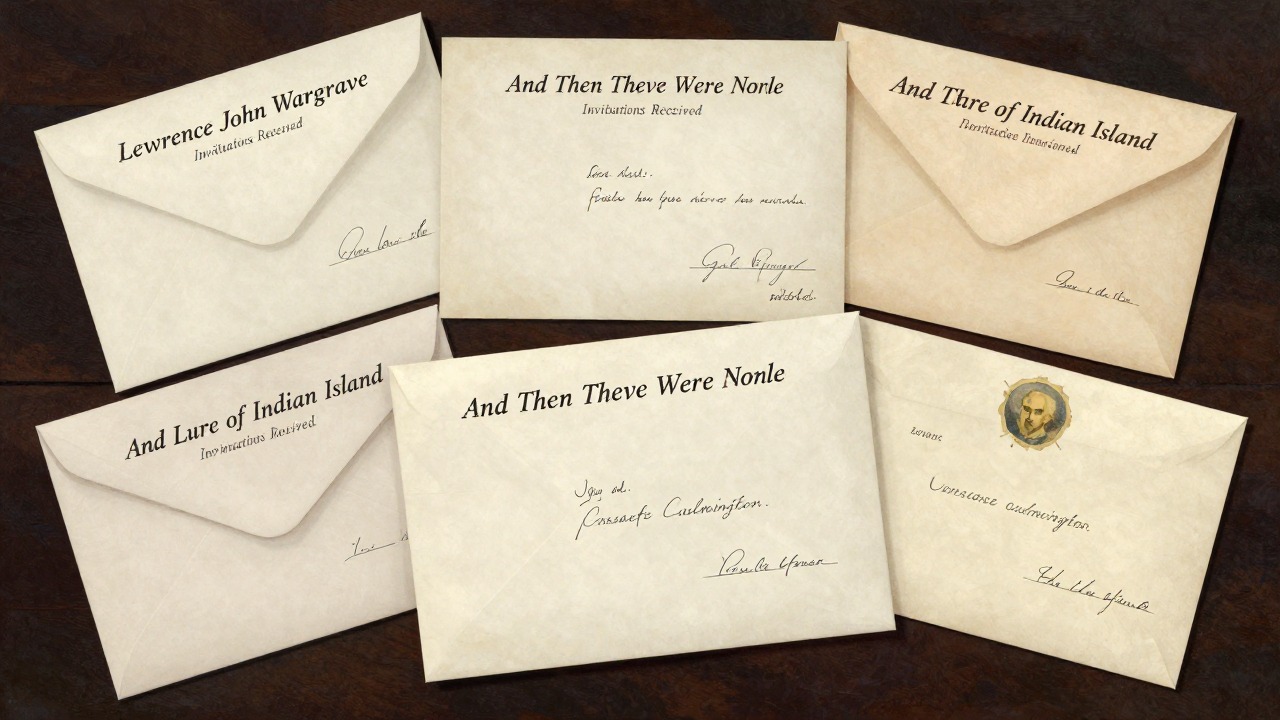
The Lure of Indian Island
Personalized Invitations
Each of the ten individuals received a carefully crafted letter or telegram designed to appeal to their personal circumstances. Lawrence John Wargrave was summoned by a letter from an old friend, Constance Culmington, who wrote in her characteristic vague style. Vera Elizabeth Claythorne received a secretarial offer from a Mrs. Una Nancy Owen, with a generous advance. Philip Lombard was approached by Isaac Morris with a hundred-guinea commission for a mysterious job. Emily Caroline Brent was invited free of charge by a woman she half-remembered from a guest house. John Gordon Macarthur thought he was meeting old cronies. Edward George Armstrong was called in for a professional consultation with a handsome fee. Anthony James Marston got a wire from his friend Badger Berkeley. William Henry Blore was hired as a detective to watch the guests. Thomas Rogers and Ethel Rogers were engaged as servants through an agency. All believed they were going to a luxurious island retreat.
The Deceptive Bait
Each letter exploited the recipient's hopes, vanities, or professional interests. The host, signing as Ulick Norman Owen or Una Nancy Owen, used initials U.N. Owen—a transparent alias for "Unknown." The invitations were masterpieces of psychological manipulation, ensuring that no one would refuse. The guests packed their bags and set out for Devon, unaware that they were walking into a trap set by a mastermind with a vendetta against unpunished killers.
Journey to the Island
Converging Paths
Separate Travels
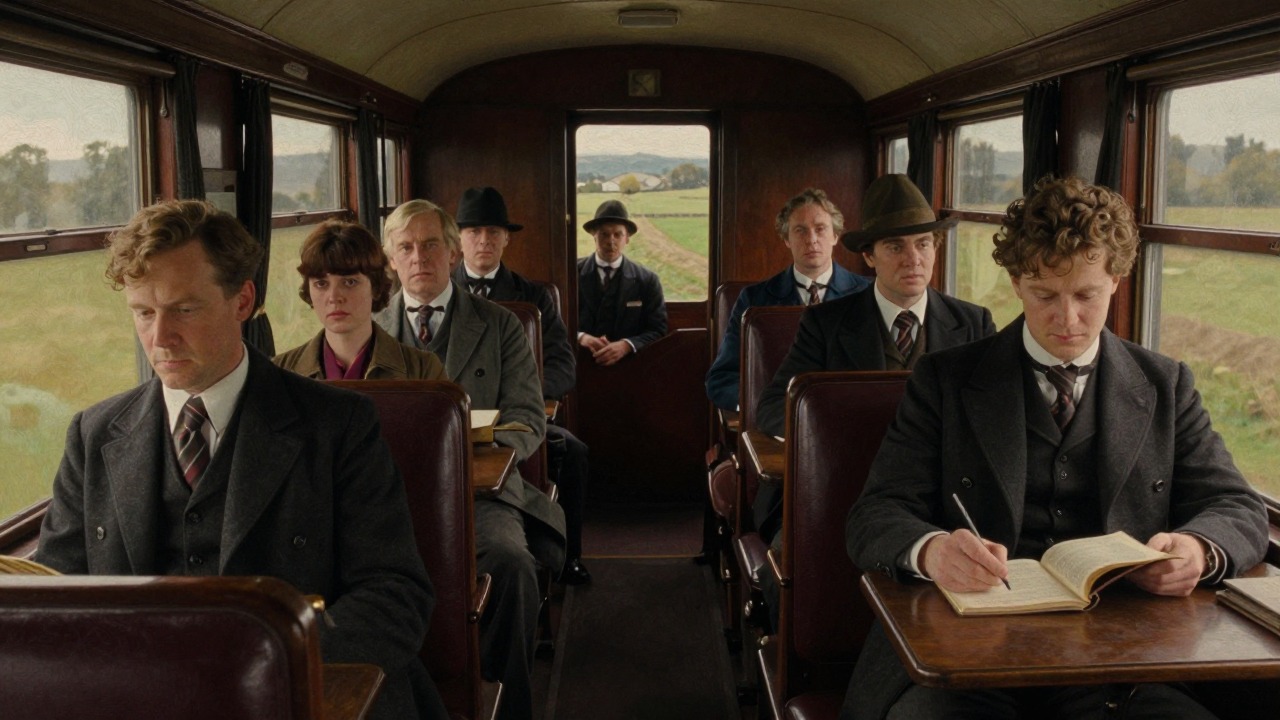
The guests traveled to Devon by various means. Lawrence John Wargrave rode in a first-class smoking carriage. Vera Elizabeth Claythorne shared a third-class carriage with five others, her mind haunted by the memory of Cyril Hamilton. Philip Lombard studied her with predatory interest. Emily Caroline Brent sat upright in a non-smoking carriage, disapproving of modern laxity. John Gordon Macarthur changed trains at Exeter. Edward George Armstrong drove his Morris across Salisbury Plain. Anthony James Marston roared down in his powerful Dalmain car. William Henry Blore took the slow train from Plymouth, rehearsing his cover story as a South African colonist. At Oakbridge station, they met and sorted themselves into taxis. Vera and Philip waited for the General. The driver, Fred Narracott, noted the odd assortment.
The Boat Crossing
At Sticklehaven, the party assembled on the jetty. The motor boat looked small, but the sea was calm. Fred Narracott ferried them across. As they rounded the rock, the house came into view—modern, luxurious, inviting. The guests disembarked, their spirits rising. But a sense of unease lingered: the host was absent, and the butler, Thomas Rogers, seemed nervous. The luxurious house, the rows of drinks, the framed nursery rhyme in every room—all were part of a carefully laid plan.
Arrival and First Impressions
The House on the Island
Modern Luxury
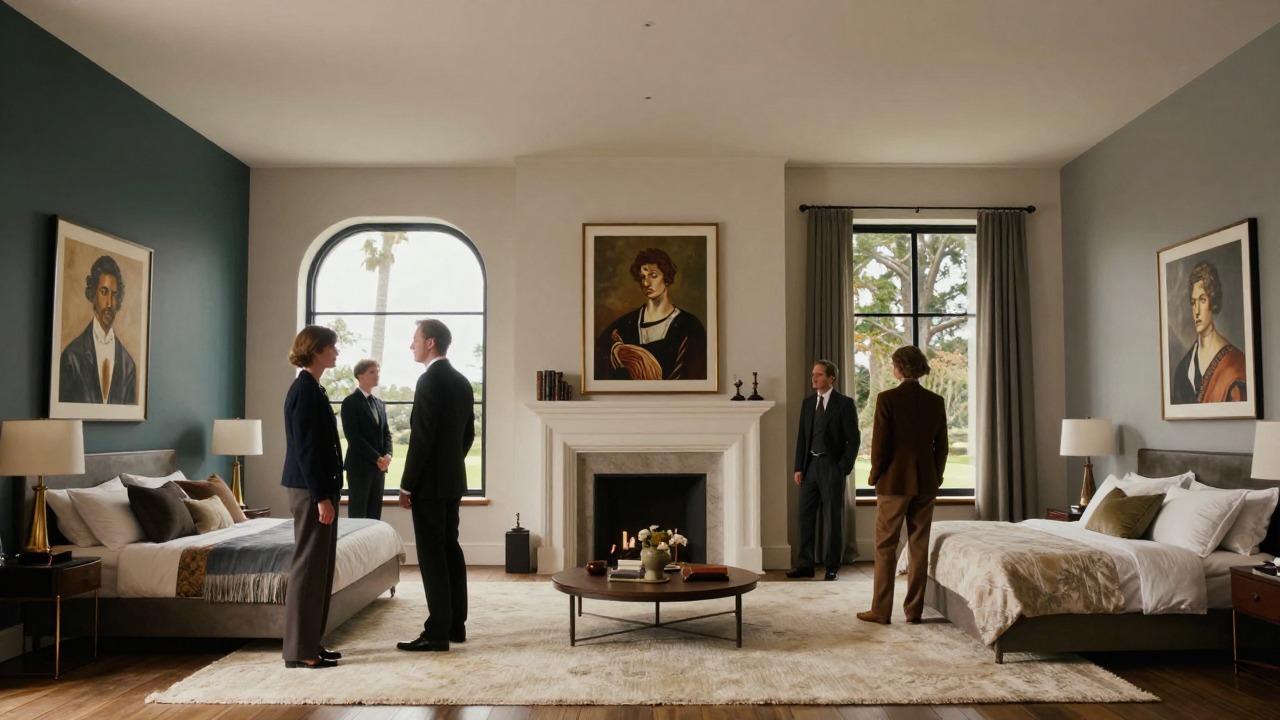
The house was a masterpiece of modern architecture: low, square, with rounded windows and gleaming interiors. The guests were shown to their rooms, each decorated in contemporary style with off-white rugs and tinted walls. On every mantelpiece was a framed copy of the nursery rhyme "Ten Little Indian Boys." Vera Claythorne found the rhyme disturbing but told herself it was a playful touch.
The Absent Host
Thomas Rogers, the butler, informed them that Mr. and Mrs. Owen were delayed and would not arrive until the next day. The guests were to make themselves at home. Drinks were laid out. The party began to mingle, but there was a constraint in the air. They were strangers, thrown together by a host they had never met. The stillness of the island, the sound of the sea, and the faint unease of the servants—Ethel Rogers looked pale and frightened—created an undercurrent of tension. Dinner was served at eight, and the party settled into an uneasy camaraderie.
Dinner and the Nursery Rhyme
The Feast and the Figures
A Fine Meal
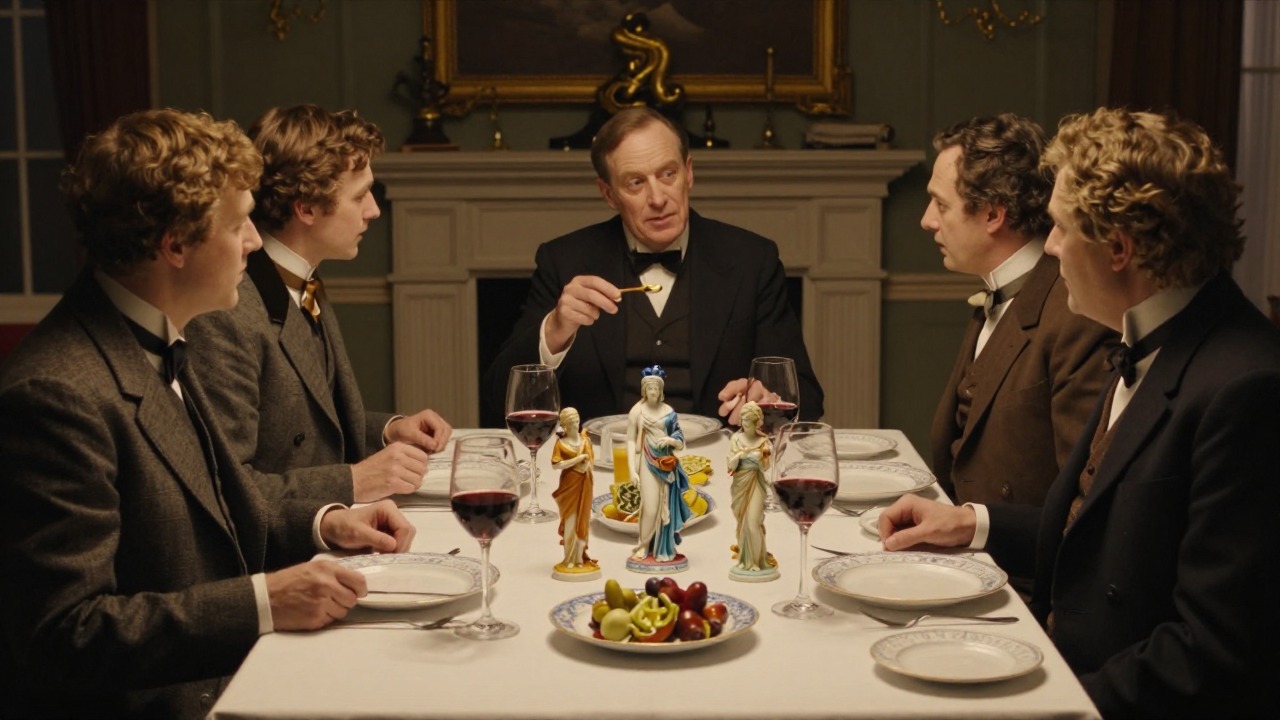
The dinner was excellent. Rogers served with professional skill. The wine was perfect. The guests began to relax and talk. Lawrence John Wargrave was amusing in a caustic way. Anthony James Marston commented on the china figures in the center of the table—ten little Indian boys. Vera Claythorne noted that the nursery rhyme was framed in her bedroom. Soon everyone admitted they had the same rhyme in their rooms. It seemed an amusing gimmick.
The Gathering Storm
But beneath the surface, individual tensions simmered. Emily Caroline Brent avoided conversation about the host. John Gordon Macarthur felt a vague unease. Philip Lombard studied the others, his instincts alert. The dinner ended with coffee, and the party moved to the drawing-room. The clock showed twenty minutes past nine. A comfortable silence fell. Then, without warning, a voice filled the room.
The Gramophone Accusation
The Voice of Judgment
The Accusations
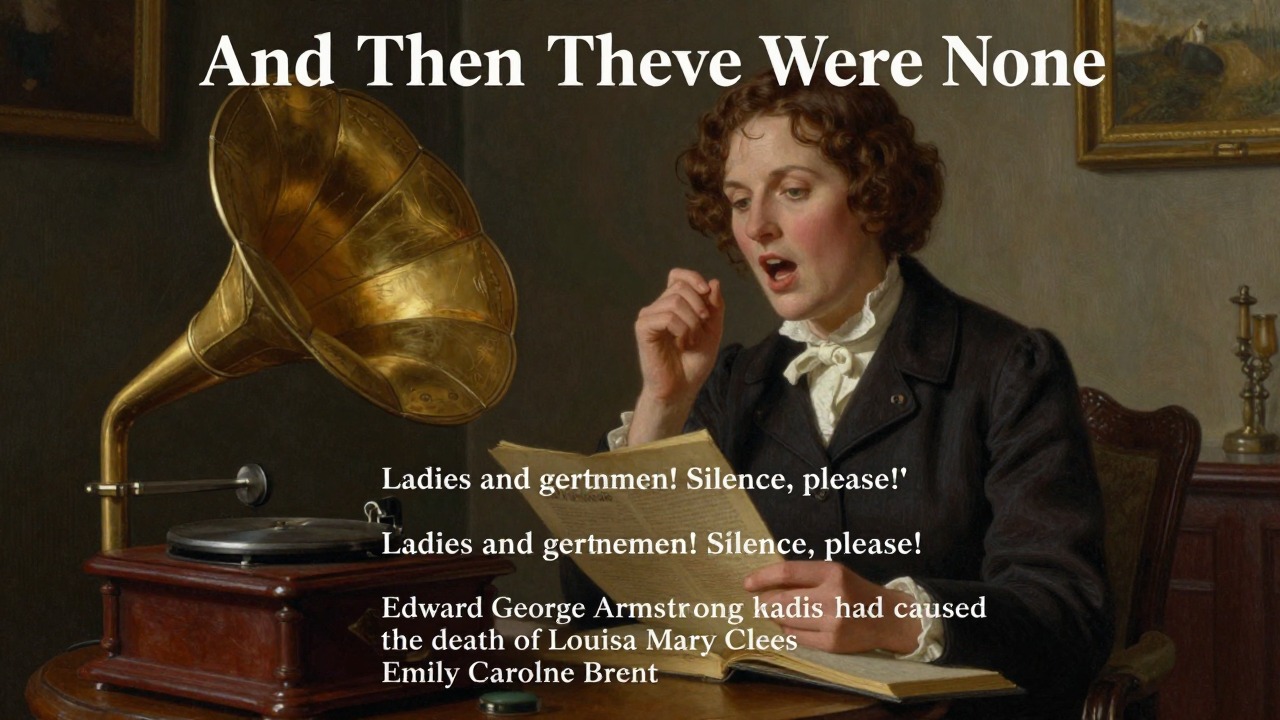
A clear, penetrating voice spoke from every corner of the room: "Ladies and gentlemen! Silence, please!" Then it recited a list of charges—each guest was accused of murder. Edward George Armstrong had caused the death of Louisa Mary Clees. Emily Caroline Brent was responsible for the death of Beatrice Taylor. William Henry Blore had brought about the death of James Stephen Landor. Vera Elizabeth Claythorne had killed Cyril Ogilvie Hamilton. Philip Lombard was guilty of the death of twenty-one men in East Africa. John Gordon Macarthur had deliberately sent Arthur Richmond to his death. Anthony James Marston had murdered John and Lucy Combes. Thomas Rogers and Ethel Rogers had brought about the death of Jennifer Brady. Lawrence John Wargrave had murdered Edward Seton.
Shock and Denial
The room exploded. Rogers dropped the coffee tray. From outside came a scream and a thud—Ethel Rogers had fainted. The guests rushed to find the source of the voice. Philip Lombard discovered a gramophone in the next room, its trumpet aimed through holes in the wall. The record was labeled "Swan Song." The voice had been recorded. Lawrence John Wargrave, with his legal mind, quickly deduced that the host was a madman, U.N. Owen, who had assembled them to exact judgment for crimes the law could not touch.
Realization of Entrapment
The Trap Closes
Pooling Information
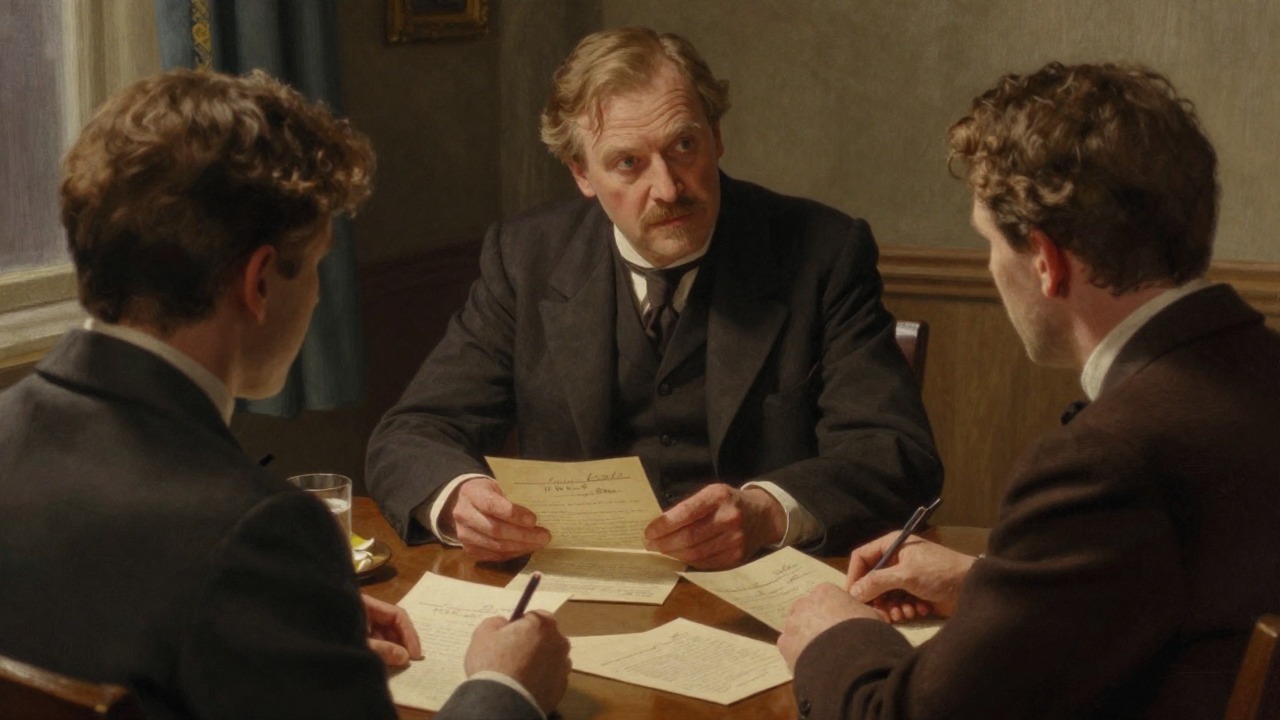
Lawrence John Wargrave took charge. He asked each guest to explain how they came to be invited. The stories matched: each had received a letter or wire from someone they thought they knew, but the signature was always U.N. Owen—Unknown. The judge announced that they had been lured by a homicidal lunatic. The boat was gone; they were trapped on the island. The only hope was to leave in the morning when the motor boat came.
The First Night
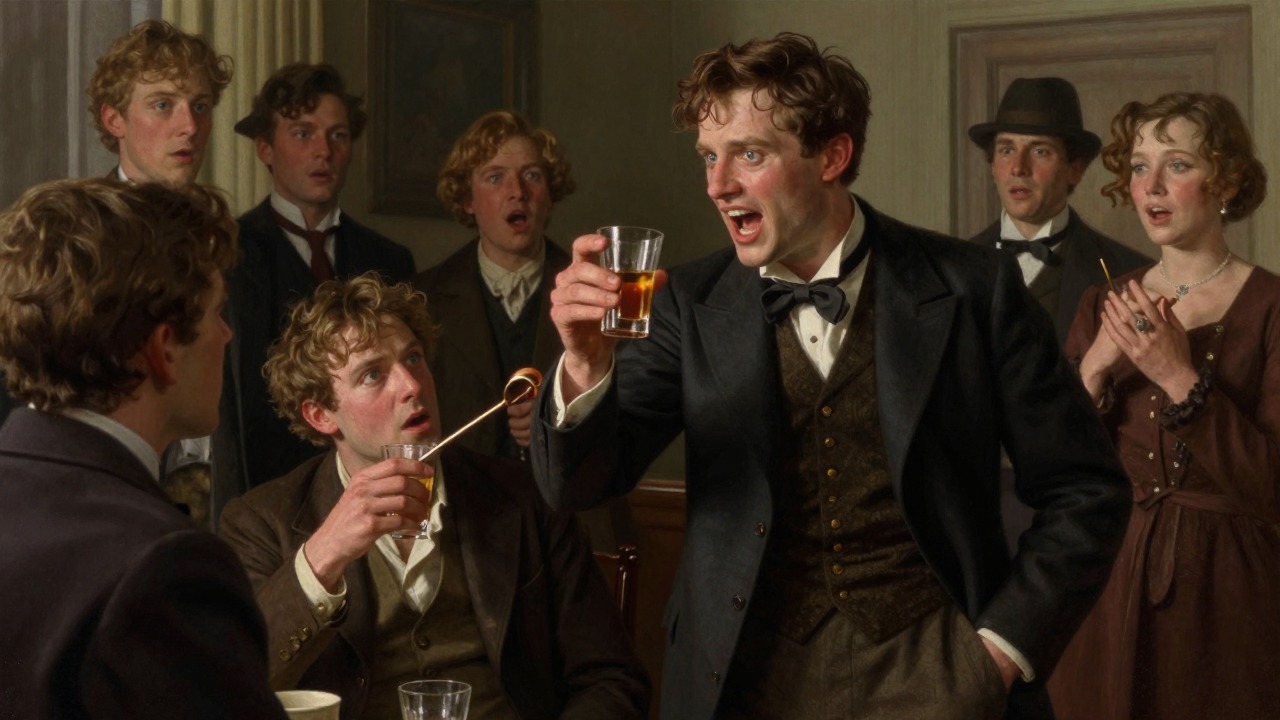
But the trap had already sprung. As they discussed their situation, Anthony James Marston poured himself a drink. He drank it quickly, choked, and collapsed. He was dead—poisoned with cyanide. The first death. The nursery rhyme had begun: "One little Indian boy choked himself." The guests realized with horror that they were not just trapped; they were marked for death, one by one. The figure of the unknown host loomed over them, invisible but omnipotent.
The First Death and Isolation
The Nightmare Begins
Anthony Marston's Death
Dr. Edward George Armstrong confirmed that Anthony Marston had been poisoned with potassium cyanide. The drink was tampered with, but no one could explain how. The guests were stunned. The young, vital man who had roared onto the island like a Norse god was now a crumpled corpse. They carried him to his room and covered him with a sheet. The night was spent in uneasy sleep, each guest locking their door.
The Morning After
The next morning, Rogers discovered that his wife, Ethel, had died in her sleep. Dr. Armstrong found no visible cause. The china figures on the dining table had decreased from ten to eight. The nursery rhyme was being enacted. The motor boat did not arrive; the sea was too rough. The telephone was dead. They were cut off from the mainland. The storm that had been brewing now broke in full force, isolating them completely. The guests realized that they were not leaving until the murderer's work was done.
early August, before the 8th
August 8th
evening of August 8th
August 8th, dinner
9:20 PM, August 8th
after the accusation, August 8th
August 8th-9th
